Short, practical videos filmed on working farms. Created by veterinarians. Every employee trained to the same standard, and you can see who finished.
$199/month covers your first 10 employees · English & Spanish · Cancel anytime
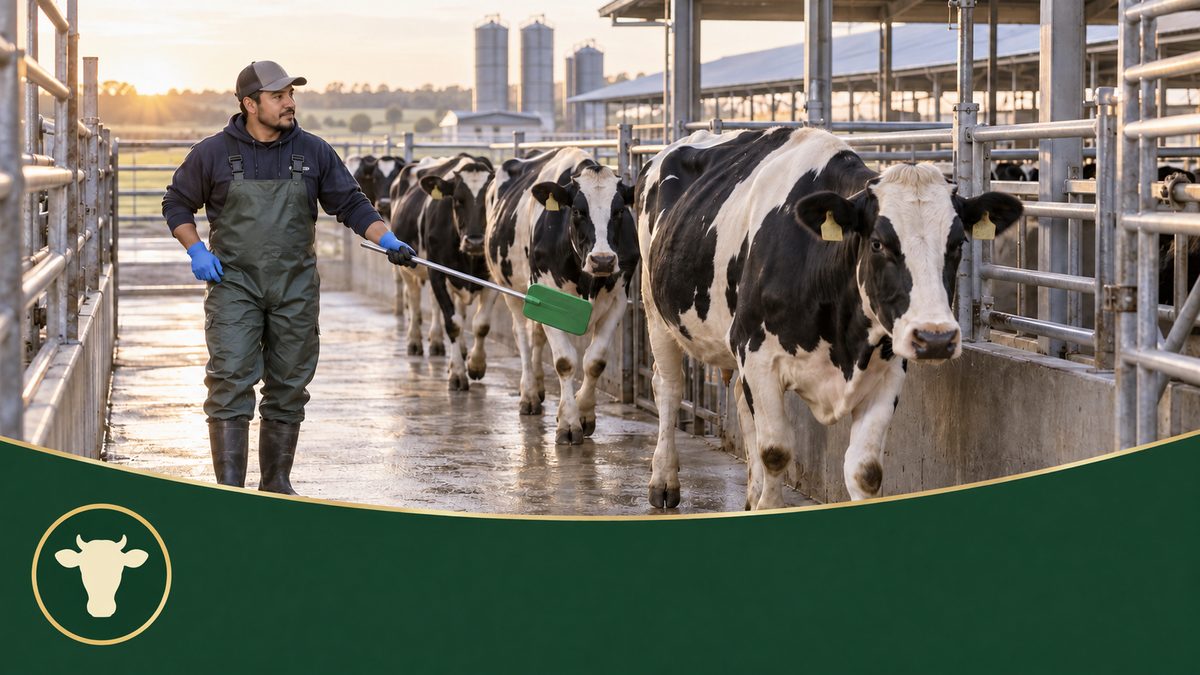
CowHub is training built by veterinarians for the people who care for the animals every day.
Training gets rushed on a busy morning, or passed down from whoever was standing nearby. Each new hire learns a slightly different way, and the shortcuts get copied.

An injury means medical bills and lost shifts. A rough calving can mean a lost calf. A stressed herd gives less. Training is the cheapest part of the list.
Milkers, calf crew, maternity, feeders, hospital pen and outside crew all learn from one library.
Print your farm's QR code and post it in the break room. New hires scan it, pick their role, and start. You assign training by role and watch completions come in.
Print it and put it in the break room.
New hires join from their own phone.
Assign training by role and see who finished.
Then $99.50 for each additional 5 employees. You pick your size when you sign up, so hiring never surprises you. Cancel anytime.
First 10 employees, then $99.50 per additional 5.
12 months for the price of 10.8. Each additional 5 employees is $1,074.60 a year.
Slide to see your price.
If you go over your size, you see a message and approve the upgrade. Nothing changes without your OK.
4-H and FFA members, small farms and working hands. Learn handling, milking and safety from veterinarians, on your phone.
or $107.89 a year
or $161.89 a year
Yes. No contracts and no cancellation fees.
No. Courses are available in English and Spanish.
Yes. Managers get completion tracking and reports, and employees earn certificates.
They scan your farm's QR code, choose their role and start training.
Veterinarians who have worked with dairy and beef producers for decades. Videos are filmed on working farms.

Set up your farm in minutes. Cancel anytime.
Training guidance only. CowHub is built to provide guidance and general training. It does not replace professional veterinary advice. Always consult with a licensed veterinarian, and follow your own farm’s specific protocols.